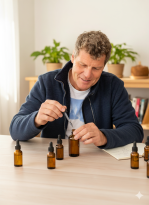
Content 50 ml
Recommended treatment
Free shipping on orders of more than € 30.00
VAT included

Winter is drawing in and the days are getting shorter. Many people find themselves feeling increasingly tired and cranky at this time of the year. You may be wondering whether it’s true that people really do feel worse during the winter months or whether this is a modern myth. Research seems to suggest that winter sadness and depression are actually real, but there are other factors to consider.
There are a number of reasons that people may feel more miserable during the winter.
You’ve probably heard of SAD (or seasonal affective disorder), as more has been made of it in recent years and it is a disorder that gets plenty of publicity.
As the days get shorter and darker, some people find themselves feeling more tired, cranky, and lethargic than usual. This seasonal depression, is more than just the winter blues, it is a clinical problem that often requires medical intervention. It has nothing to do with the weather getting colder, but more to do with the short days and the balance of light and dark. Many people travel to and from work in the dark, and are then cooped up inside all day, so that the only time they have to spend outside is when they have a day off, and unfortunately for many people, days off are spent doing chores and running errands. This is a particular issue for women, and research in the USA suggests that the ratio of women to men who have seasonal disorder is 3:1.
If you have these symptoms outside the winter months, then it is more likely that you do not have SAD, but you may have depression.
To be diagnosed with SAD, episodes of major depression need to occur as the season changes, for at least two years, with symptoms improving in the spring and summer.
Everyone has a tendency to feel a little down over the winter months, but for people with SAD, their low mood is intolerable. If you do display some symptoms during the darker months, you may think you’re over-reacting and you don’t have SAD.
Potentially you may have a case of the winter blues. The symptoms are the same, this is just a milder form of depression after all. The way to tell the difference is to consider how far the symptoms that you are experiencing affect your everyday life. Are you still able to cope at work or college? Are you maintaining your relationships?
Regardless of the severity of your symptoms, it can never hurt to talk to a professional about the way you are feeling. They can offer reassurance one way or the other. There are many types of treatment available, so you can find one to suit you, and prevent your symptoms getting worse.
Darker mornings and nights often spell the end of people’s exercise regime. When it is cold and wet it is far easier to catch the bus or take the car into work instead of walking, and who wants to go for a jog when they return home in the evening, and the living room is warm and cosy? Well, this lack of exercise in itself can be a huge part of the problem. Moving around can only boost your mood, so make sure you still do as much as you can.
Christmas is on the horizon and of course everybody ends up stretching themselves more than they should. It’s not just present-buying, but the parties, food and clothing, as well as heating your home. If money is an issue for you this is bound to bring you down. It is important to take control of your finances and don’t over exert yourself.
Christmas and New Year and family gatherings at this time of year can make you nostalgic for times past, and those who are lost. Everyone around you seems to be having a good time, and the message is that if you are not, you’re somehow less than everyone else. Ignore this kind of message. It’s not true. Everyone has their own struggles and you cannot judge a present by its’ wrapping.
If you want to be on your own, you are perfectly entitled to do that. If you prefer company, then set out to find some. The important thing is to manage your expectations about the holidays, and if you have SAD, or the winter blues, remember to see this festive period as a few days out of many, and set your sights on what happens afterwards.
If you are suffering – feeling down or miserable in any way, it is worth taking further advice. Don’t be afraid to ask your doctor, or other professional, or find a talking therapy to help.
Created by Tom Vermeersch

Tom Vermeersch is a certified Psychologist and Bach flower expert with more than 30 years of experience.

Do you expect too much from others? Find out!
Most people are disappointed when others don't meet their expectations. But when you always expect too much, it isn't healthy, either for yourself or for others. If you often find yourself feeling let down by your loved ones or even by strangers, could it be that you have unrealistic ideas of how people should act?

20 natural ways to prevent and relieve headaches
Headaches can be a real nuisance, especially if you get them frequently. Luckily, there are many natural ways to prevent and relieve headaches without needing to reach for over the counter medication.

5 tips to survive autumn healthily
We simply can’t avoid noticing the changes all around us. Autumn is here... Autumn is also called a transitional season. Slowly and steadily, it prepares us for the transition...

What makes it so hard to go back to school?
Going back to school during a pandemic is a new experience for everyone, and it's understandable if children are feeling anxious about it. We take a look at some of the issues and how you can help your child to get ready for returning to the classroom.

How can I help my child achieve their dreams?
Children's imaginations know no limits and their dreams are a mix of hopes and fantasies, the real and the magical, the impossible and the achievable.

Did you get stuck in the past?
Do you find yourself often thinking about your past? Do you wish you could turn back the clock to days gone by or things as they were before covid disrupted the world?

Six things we think will make us happy, but don't!
When you think about things that will make you happy, what are the images that come to mind? Wealth, beauty, a dream house, long holidays, a top of the range car? Happiness is not a constant and how happy we feel depends on the way we choose to live our lives.

Standing Up To A Narcissistic Pervert
Whether it's with a romantic partner or a housemate, there's no doubt that a relationship with a narcissist can be very challenging. But are there ways to cope better? Or is it better to leave the relationship?

Have you considered yoga? The advantages of practicing yoga
Have you considered yoga? There are many advantages to practicing yoga. It is a holistic practice benefitting you physically, emotionally & mentally.

Are you resilient enough? Take our quiz!
Do you have enough resilience to face the world out there? Take our quiz to find out how resilient you are and find tips on how to build your mental resilience.
Winter is drawing in and the days are getting shorter. Many people find themselves feeling increasingly tired and cranky at this time of the year. You may be wondering whether it’s true that people really do feel worse during the winter months or whether this is a modern myth. Research seems to suggest that winter sadness and depression are actually real, but there are other factors to consider.
There are a number of reasons that people may feel more miserable during the winter.
You’ve probably heard of SAD (or seasonal affective disorder), as more has been made of it in recent years and it is a disorder that gets plenty of publicity.
As the days get shorter and darker, some people find themselves feeling more tired, cranky, and lethargic than usual. This seasonal depression, is more than just the winter blues, it is a clinical problem that often requires medical intervention. It has nothing to do with the weather getting colder, but more to do with the short days and the balance of light and dark. Many people travel to and from work in the dark, and are then cooped up inside all day, so that the only time they have to spend outside is when they have a day off, and unfortunately for many people, days off are spent doing chores and running errands. This is a particular issue for women, and research in the USA suggests that the ratio of women to men who have seasonal disorder is 3:1.
If you have these symptoms outside the winter months, then it is more likely that you do not have SAD, but you may have depression.
To be diagnosed with SAD, episodes of major depression need to occur as the season changes, for at least two years, with symptoms improving in the spring and summer.
Everyone has a tendency to feel a little down over the winter months, but for people with SAD, their low mood is intolerable. If you do display some symptoms during the darker months, you may think you’re over-reacting and you don’t have SAD.
Potentially you may have a case of the winter blues. The symptoms are the same, this is just a milder form of depression after all. The way to tell the difference is to consider how far the symptoms that you are experiencing affect your everyday life. Are you still able to cope at work or college? Are you maintaining your relationships?
Regardless of the severity of your symptoms, it can never hurt to talk to a professional about the way you are feeling. They can offer reassurance one way or the other. There are many types of treatment available, so you can find one to suit you, and prevent your symptoms getting worse.
Darker mornings and nights often spell the end of people’s exercise regime. When it is cold and wet it is far easier to catch the bus or take the car into work instead of walking, and who wants to go for a jog when they return home in the evening, and the living room is warm and cosy? Well, this lack of exercise in itself can be a huge part of the problem. Moving around can only boost your mood, so make sure you still do as much as you can.
Christmas is on the horizon and of course everybody ends up stretching themselves more than they should. It’s not just present-buying, but the parties, food and clothing, as well as heating your home. If money is an issue for you this is bound to bring you down. It is important to take control of your finances and don’t over exert yourself.
Christmas and New Year and family gatherings at this time of year can make you nostalgic for times past, and those who are lost. Everyone around you seems to be having a good time, and the message is that if you are not, you’re somehow less than everyone else. Ignore this kind of message. It’s not true. Everyone has their own struggles and you cannot judge a present by its’ wrapping.
If you want to be on your own, you are perfectly entitled to do that. If you prefer company, then set out to find some. The important thing is to manage your expectations about the holidays, and if you have SAD, or the winter blues, remember to see this festive period as a few days out of many, and set your sights on what happens afterwards.
If you are suffering – feeling down or miserable in any way, it is worth taking further advice. Don’t be afraid to ask your doctor, or other professional, or find a talking therapy to help.

Most people are disappointed when others don't meet their expectations. But when you always expect too much, it isn't healthy, either for yourself or for others. If you often find yourself feeling let down by your loved ones or even by strangers, could it be that you have unrealistic ideas of how people should act?
Read the complete article
Headaches can be a real nuisance, especially if you get them frequently. Luckily, there are many natural ways to prevent and relieve headaches without needing to reach for over the counter medication.
We simply can’t avoid noticing the changes all around us. Autumn is here... Autumn is also called a transitional season. Slowly and steadily, it prepares us for the transition...
Read the complete article
Going back to school during a pandemic is a new experience for everyone, and it's understandable if children are feeling anxious about it. We take a look at some of the issues and how you can help your child to get ready for returning to the classroom.
Children's imaginations know no limits and their dreams are a mix of hopes and fantasies, the real and the magical, the impossible and the achievable.
Do you find yourself often thinking about your past? Do you wish you could turn back the clock to days gone by or things as they were before covid disrupted the world?
When you think about things that will make you happy, what are the images that come to mind? Wealth, beauty, a dream house, long holidays, a top of the range car? Happiness is not a constant and how happy we feel depends on the way we choose to live our lives.
Whether it's with a romantic partner or a housemate, there's no doubt that a relationship with a narcissist can be very challenging. But are there ways to cope better? Or is it better to leave the relationship?
Have you considered yoga? There are many advantages to practicing yoga. It is a holistic practice benefitting you physically, emotionally & mentally.
Do you have enough resilience to face the world out there? Take our quiz to find out how resilient you are and find tips on how to build your mental resilience.
Bach Flowers are not medicinal but harmless plant extracts which are used to support health.
© 2026 Mariepure - Webdesign Publi4u

Are you unsure which Bach flowers can help you? Contact Tom for free advice.